Creative Biolabs is offering the most comprehensive services for antibody development projects. With strict regulation and effective execution, we are dedicated to providing the most valuable solutions to complete your projects.
HighlightsCreative Biolabs is offering the most comprehensive services for antibody development projects. With strict regulation and effective execution, we are dedicated to providing the most valuable solutions to complete your projects.
HighlightsCreative Biolabs has established a broad range of platforms for developing novel antibodies or equivalents. These cutting-edge technologies enable our scientists to meet your demands from different aspects and tailor the most appropriate solution that contributes to the success of your projects.
HighlightsWith deep understanding in antibody-related realms and extensive project experience, Creative Biolabs offers a variety of references to help you learn more about our capacities and achievements, including infographic, flyer, case study, peer-reviewed publications, and all kinds of knowledge that can assist your projects. You are also welcome to contact us directly for more specific solutions.
HighlightsGet a real taste of Creative Biolabs, one of the most professional custom service providers in the world. We are committed to providing highly customized comprehensive solutions with the best quality to advance your projects.
HighlightsRodent antibodies, particularly those derived from mouse and rat hybridomas, remain the cornerstone of therapeutic antibody development, diagnostic assay design, and fundamental research. Securing the precise amino acid sequence of your critical rodent antibody is the ultimate form of biological insurance. Creative Biolabs offers a state-of-the-art De Novo Rodent Antibody Sequencing Service, leveraging our advanced mass spectrometry platforms and proprietary bioinformatics to deliver 100% accurate, full-length antibody sequences. By sequencing the functional protein directly, we bypass the limitations and errors of traditional nucleotide-based methods. This definitive sequence data empowers you to preserve your valuable assets, transition to recombinant production, and accelerate your antibody engineering and humanization programs.
The reliance on hybridoma cell lines for producing mouse, rat, or hamster monoclonal antibodies (mAbs) presents significant risks that can halt research and development pipelines.
Our De Novo Antibody Sequencing service is the definitive solution to these challenges, providing a permanent, accurate, and bankable record of your antibody.
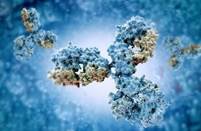
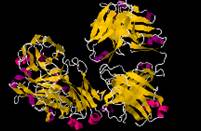
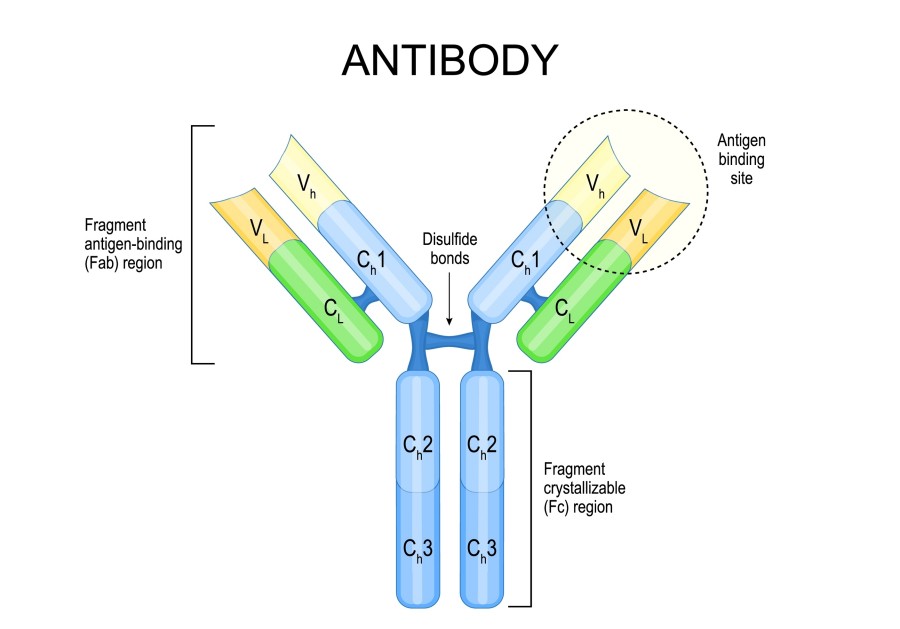 Fig. 1 Structure of Antibody.
Creative Biolabs has engineered a robust, high-throughput platform specifically for De Novo Rodent Antibody Sequencing. Our approach is built on advanced mass spectrometry (MS) protein sequencing, which analyzes the antibody protein itself, not the genetic material. This "what you see is what you get" method ensures the sequence we deliver is that of the functional, secreted antibody.
Our DADS platform integrates state-of-the-art hardware with proprietary bioinformatics algorithms to achieve unparalleled accuracy. We can successfully sequence antibodies from any rodent species, including mouse, rat, hamster, and guinea pig, covering all isotypes and allotypes.
Our sequencing workflow is a multi-stage process refined over 20+ years of protein chemistry expertise.
We begin with your sample—purified antibody, hybridoma supernatant, or cell pellets. The antibody is purified to homogeneity and validated by SDS-PAGE and intact mass analysis.
This is a critical step for ensuring 100% coverage. Instead of relying on a single enzyme like trypsin, we digest the antibody using a panel of 5-6 different enzymes in parallel. This creates a library of overlapping peptide fragments covering the entire length of both the heavy and light chains.
Each peptide digest is injected into our high-sensitivity liquid chromatography systems, which are coupled directly to state-of-the-art mass spectrometers. The MS1 scan captures the precise mass of the intact peptides, while the MS2 (or MS/MS) scan fragments each peptide and records the mass of its constituent pieces.
This is our core technology. The raw MS/MS data is fed into our proprietary DADS algorithm.
Our expert scientists manually review the complete, annotated sequence. We confirm 100% coverage of the variable (V) and constant (C) domains and identify any PTMs. The final result is a comprehensive report that is publication-ready and patent-ready.
| Feature | Creative Biolabs' Advantage |
| Unmatched Accuracy | 100% accurate protein-level sequence. We sequence the functional antibody, avoiding all errors from RNA-level sequencing (e.g., PCR mutations, non-secreted genes). |
| Complete Coverage | Guaranteed 100% coverage of both variable domains (VH/VL) and constant domains (CH/CL). |
| Definitive I/L Differentiation | Our multi-enzyme and bioinformatics approach provides unambiguous identification of Isoleucine vs. Leucine. |
| Species & Isotype Versatility | We routinely sequence mAbs from Mouse, Rat, Hamster, and Guinea Pig of all isotypes (IgG, IgM, IgA, IgE) and allotypes. |
| Flexible Sample Input | We accept purified antibodies, ascites fluid, hybridoma cell culture supernatants, or even non-viable hybridoma cell pellets. |
| High Sensitivity | Our advanced MS platform can successfully sequence antibodies from low-yield hybridoma lines. |
| Fast Turnaround | We deliver complete, validated sequences in a short time. |
Choosing the right sequencing method is critical. While traditional Sanger sequencing of cDNA is a common technique, it is fundamentally inferior to direct protein sequencing for antibody validation.
| Parameter | Creative Biolabs De Novo MS Sequencing | Traditional cDNA (Sanger) Sequencing |
| Template | Functional Protein | mRNA (cDNA) |
| Accuracy | 100% match to the final protein. | Error-prone. Can amplify pseudo-genes, sterile transcripts, or sequences from contaminating cells. |
| Handles Non-Viable Cells? | Yes. As long as protein is present. | No. Requires viable cells with intact mRNA. |
| Identifies PTMs? | Yes. Can identify glycosylation, oxidation, etc. | No. |
| Isoleucine (I) vs. Leucine (L) | Definitive Identification. | Cannot distinguish. Codons are ambiguous. |
| 5' End Coverage | Guaranteed. | Often incomplete. Primer design can miss the N-terminal leader sequence. |
| Workflow | Streamlined, highly optimized. | Complex, prone to PCR bias and cloning artifacts. |
| Best For | Definitive sequencing, patent filing, humanization, and recombinant production. | Rapid, low-cost screening (with high risk of error). |
An accurate sequence is not just data; it's the key to unlocking the full potential of your rodent antibody.
To further support your research, Creative Biolabs offers a suite of antibody sequencing related services:
Don't let hybridoma instability put your research at risk. Contact our team of experts to discuss your De Novo Rodent Antibody Sequencing project and receive a customized, no-obligation quote.
Q: What is De Novo Rodent Antibody Sequencing?
A: De Novo Rodent Antibody Sequencing is the process of determining the precise amino acid sequence of a rodent (mouse, rat, etc.) antibody without prior knowledge of its DNA or RNA sequence. At Creative Biolabs, we use a mass spectrometry-based protein sequencing approach for the highest possible accuracy.
Q: Why is protein sequencing (MS) better than DNA/RNA sequencing?
A: RNA sequencing from a hybridoma cell line tells you what might be expressed, but it's often inaccurate. It can pick up non-secreted antibody genes (pseudo-genes) or sequences from contaminating cells. Our De Novo Antibody Sequencing (MS) method sequences the actual, functional protein that is secreted, guaranteeing the sequence is correct and biologically relevant.
Q: Can you sequence an antibody from a non-viable hybridoma cell line?
A: Yes. This is a major advantage of our service. As long as a sufficient quantity of antibody protein is present (e.g., in a cell pellet or old supernatant), we can sequence it. Traditional RNA sequencing requires live, viable cells.
Q: How do you differentiate between Isoleucine (I) and Leucine (L)?
A: This is a classic challenge as they have identical mass. We solve this using our multi-enzyme strategy. For example, the enzyme Chymotrypsin typically cleaves at Leucine but not Isoleucine. By analyzing the unique peptide fragments generated by this and other enzymes, our DADS algorithm can definitively place I and L in their correct positions.
Q: What rodent species can you sequence?
A: We have validated protocols for all common rodent species, including mouse, rat, hamster, and guinea pig. We can also perform De Novo Antibody Sequencing on antibodies from virtually any species.
All listed services and products are For Research Use Only. Do Not use in any diagnostic or therapeutic applications.